
Nutrient deficiencies and excesses in cannabis plants
Nutrient deficiencies and excesses in cannabis plants can prevent us from achieving optimal results in cultivation. Therefore, we must try to avoid and
to correct the deficiencies and excesses that plants develop.
To determine a deficiency or excess, we must know what they are. nutrients, the types that exist and how they act in the plant.
What are deficiencies?
Nutrient deficiencies are the lack or inadequate supply of a particular nutrient. To avoid deficiencies, we must fertilize the cannabis crop with the necessary nutrients.
What are excesses?
Excesses are accumulations of salts in plant metabolism. To avoid excesses, we must provide a balanced diet appropriate to the type of crop, substrate, and genetics being cultivated. Each plant variety will have specific nutrient requirements.
How to detect deficiencies and excesses
To detect an excess or deficiency, we must pay close attention and observe the color and condition of the leaves. These will indicate what type of deficiency or excess the plant is experiencing, as they reflect the nutritional status.
It is always easier to correct a deficiency than an excess, so it is not advisable to overdo it with nutrients.
Excessive nutrient buildup is more difficult to correct because it requires flushing the roots, using a nutrient cleaner, and adding enzymes to help break down dead roots. This will lead to a delay in the plant's development.
It should be noted that the larger the plant, the more nutrients it will require to feed its large root system.
Nutrient deficiencies cause stress in the plant, resulting in weaker plants that are more susceptible to pests and fungi. They also negatively impact the final yield, producing buds with less flavor, weight, size, and potency.
While excesses will cause burns on the leaves and alter the flavor of the buds.
To avoid deficiencies and excesses, it is important to measure, adjust, and stabilize your EC (electrical conductivity) and pH.
By measuring the EC we will know the salt levels and we can adjust the amount of nutrients.
It should be noted that sometimes deficiencies and excesses are not only due to a lack or excess of fertilizer but also to other types of problems that prevent the plant from absorbing the necessary nutrients.
There are many types of deficiencies and excesses that our plants can suffer from. Below, we detail the most important ones so you can detect them in time and correct them.
DEFICIENCIES AND EXCESSES OF PRIMARY NUTRIENTS
NITROGEN

EXCESS
- The stems and foliage weaken
- The greenness of the plant increases
- The inner leaves turn dark green.
- The water transport system is weakening
- The harvest tastes green
DEFICIENCY
- The plants are smaller
- Smaller leaves with less shine
- The leaves turn yellow
- The yellow color of the leaves rises throughout the entire plant
- The lower leaves curl, discolor, and fall off
- Premature flowering and low yield
PHOSPHORUS
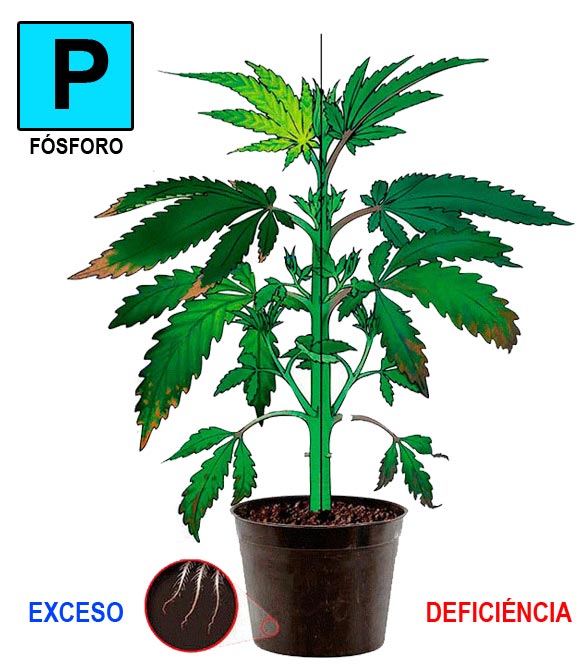
EXCESS
- New leaves grow thin and develop chlorosis
- Burns on the tips and edges of the leaves
- Smaller internodal space
- The lower leaves curl and develop spots
- Once dried, the buds take on a chemical taste.
- The root tips show dieback
- The harvest decreases
DEFICIENCY
- Vertical and lateral growth is slowing down.
- The plant weakens and becomes more susceptible to diseases and pests.
- The petioles turn dark purple.
- The leaves turn blue-green or dark purple
- The most affected leaves develop a dark metallic bronze color, curl, wither, and fall off.
POTASSIUM
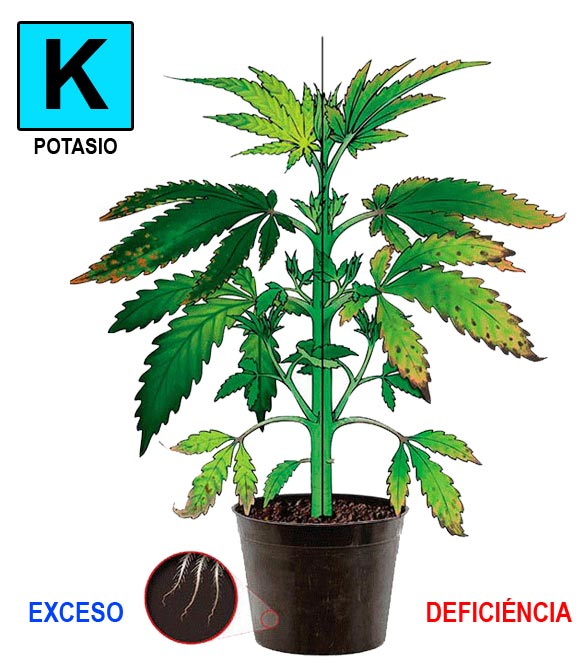
EXCESS
- New leaves grow thin and develop chlorosis
- Burns on the tips and edges of the leaves
- Smaller internodal space
- The lower leaves curl and develop spots
- The root zone becomes more acidic.
- The tips of the roots recede
DEFICIENCY
- The older leaves turn pale and suffer from chlorosis
- The edges and tips of the leaves turn rust-colored and burn
- The branching of new stems may increase
- Flowering is delayed and reduced
- The stems become weak, spindly, and very fragile.
DEFICIENCIES AND EXCESSES OF SECONDARY NUTRIENTS
CALCIUM
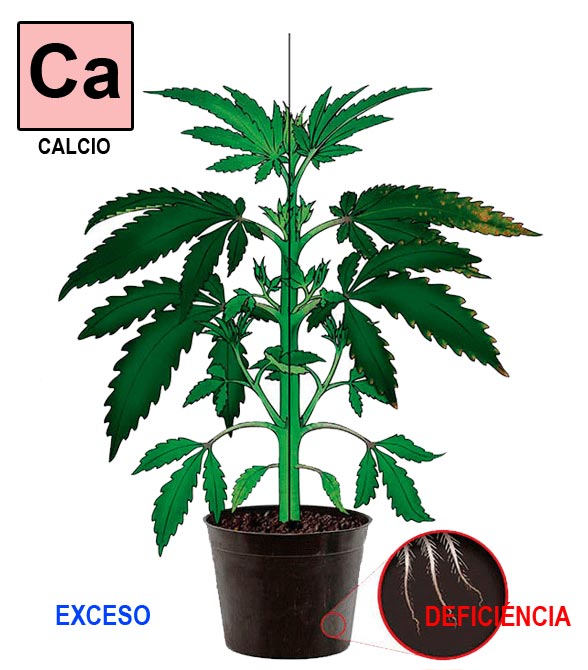
EXCESS
- The new leaves wither
- Growth may be stunted
- It blocks the absorption of potassium, iron, and manganese.
DEFICIENCY
- Delayed plant growth and reduced harvest
- Flower development is slow
- Yellowish-brown spots on the edge and surface of the leaves
- The lower leaves begin to curl and bend
- The roots begin to recede
MAGNESIUM
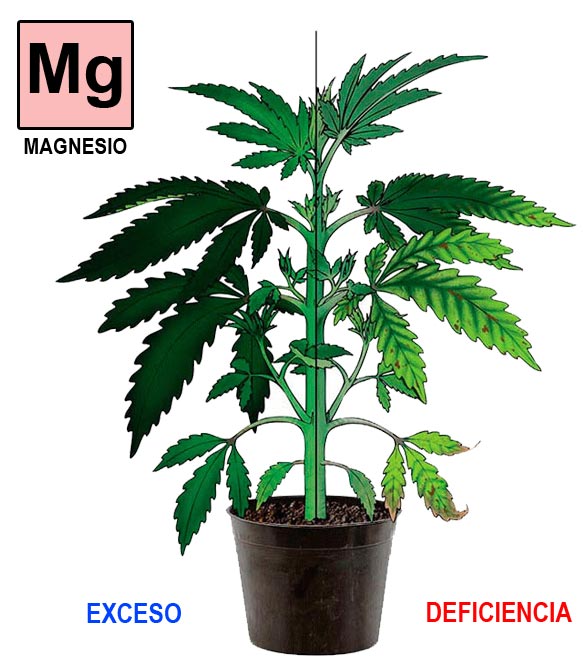
EXCESS
- Growth retardation
- Dark green foliage
- The symptoms appear as if it were salt toxicity.
DEFICIENCY
- The plant generally looks sick
- The deficiencies exist 4 to 6 weeks before they become externally evident.
- Brown/yellow spots and irregularities appear on old and middle-aged leaves
- Old leaves dry out, curl, and tend to fall off.
SULFUR

EXCESS
- The plant is smaller and the development is uniformly less
- The leaves turn dark green.
- When the excess is severe, the tips and edges of the leaves can become discolored and burned.
DEFICIENCY
- The buds form weakly and slowly.
- The young leaves turn a yellowish lime color and their growth stagnates.
- The veins of the leaves turn yellow
- The tips of the leaves may burn, darken, and take on a downward-pointing hook shape
- If the plant also has a general nutrient deficiency, long purple spots appear on the new stems.
- The stem becomes woody
MICRONUTRIENT DEFICIENCIES AND EXCESSES
BORON
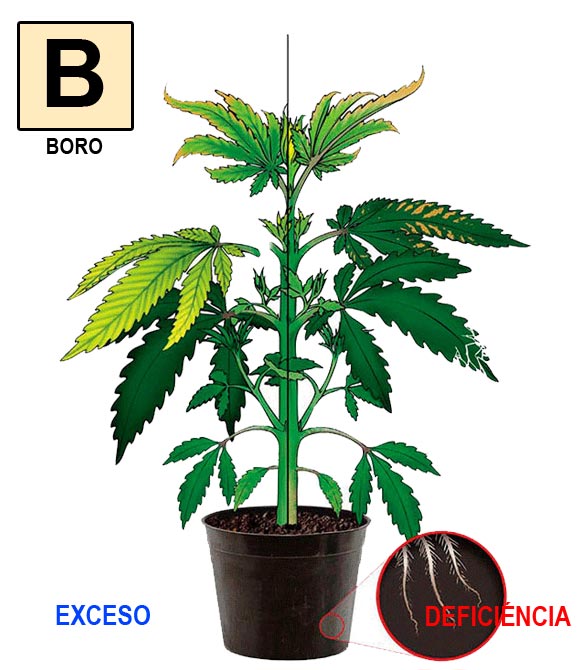
EXCESS
- The tips of the leaves turn yellow before appearing burned
- Yellowed and fallen leaves
DEFICIENCY
- The new shoots, tips, and roots grow abnormally.
- The new shoots look burned and can contort.
- Necrotic spots develop between the veins of the leaves
- Thick and brittle leaves
- The new stems take on a rust color
- The tips of the roots swell, become discolored, and stop growing.
MANGANESE
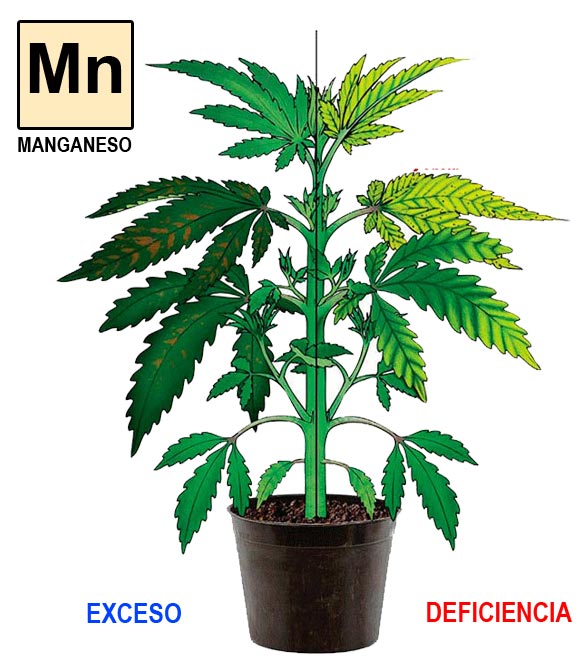
EXCESS
- The new leaves develop chlorosis, changing from dark orange to brown/rust spots.
- Tissue damage appears first in young leaves before spreading to older ones.
DEFICIENCY
- Young leaves show symptoms of chlorosis
- Severely affected leaves show necrosis, turn pale, and fall off.
- The edges of the leaves remain dark green surrounding the chlorosis
- The symptoms spread from the youngest to the oldest leaves.
ZINC
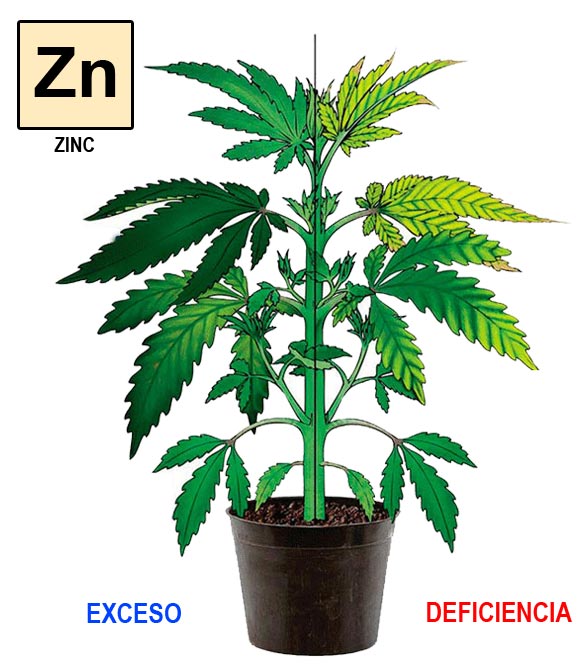
EXCESS
- Zinc excess is not common but is extremely toxic
- With excessive excess, the plants die quickly.
- It causes iron deficiencies
DEFICIENCY
- The new leaves show chlorosis, developing smaller and thinner leaves that tend to curl and wrinkle.
- The shoot and new shoots are piling up
- The tips and edges of the leaves become discolored and burnt.
- Atrophy occurs between the spaces of the new nodes
- It can severely decrease performance
IRON
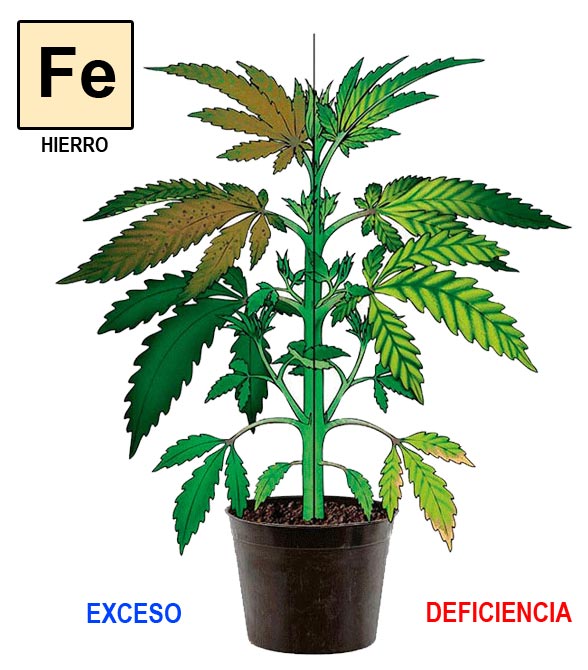
EXCESS
- The leaves turn bronze in color, with dark brown spots on the smaller leaves.
- Phosphorus absorption deteriorates and signs appear in the lower leaves
DEFICIENCY
- The shoots and young leaves develop chlorosis, starting on the side opposite the leaf tip.
- As the deficiency progresses, the larger leaves begin to show chlorosis in the veins.
- The leaves may develop necrosis and fall off
- Phosphorus absorption deteriorates and signs appear in the lower leaves
CHLORINE
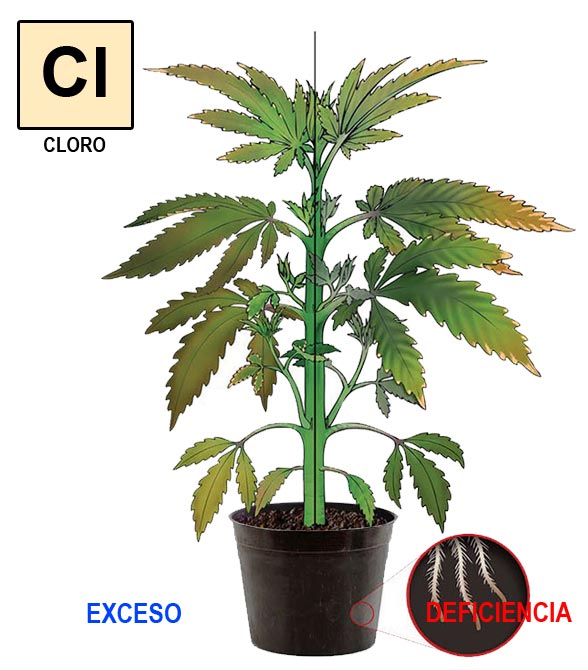
EXCESS
- The leaves turn a yellowish bronze color and are smaller and slower to develop.
- The tips and edges of young leaves get burned
DEFICIENCY
- The leaves turn a yellowish bronze color and are burned at the tips and edges.
- The young leaves turn pale green and wither.
- The roots develop thick tips and become stunted.
COPPER
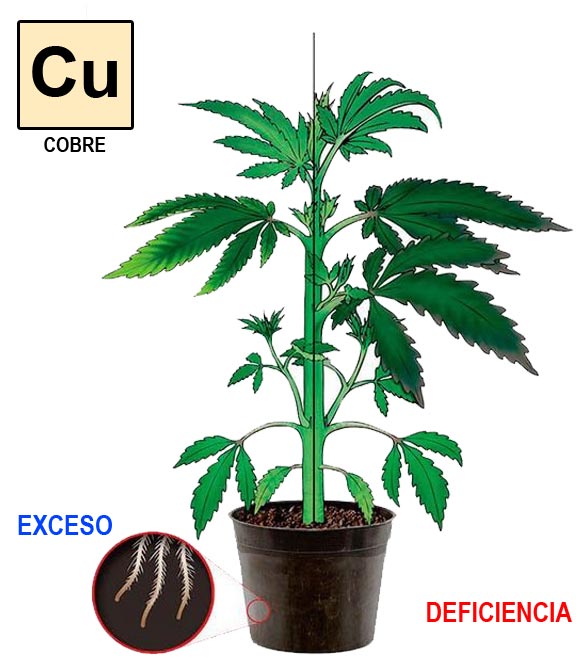
EXCESS
- Slower global growth
- Interveinal iron chlorosis is present
- Fewer branches grow
- The roots either decline or become thick with slow growth
DEFICIENCY
- The leaves and young shoots wither, curl, and may die
- The tips and edges of the leaves turn from dark green to a gray/copper tone and die.
- Growth is slow and underperforming.
MOLYBDENUM
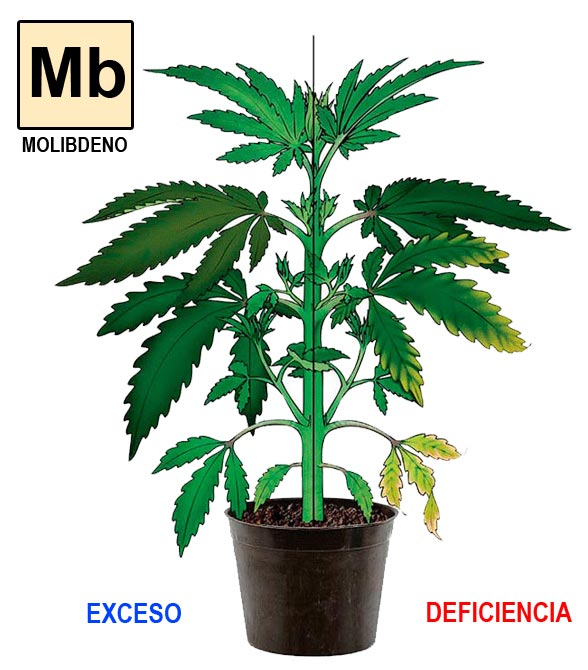
EXCESS
- Causes iron deficiency
- The leaves are losing their color
DEFICIENCY
- The leaves begin to fall
- In cold weather, the leaves turn yellow and may develop chlorosis.
-
Zuri Widow
9,00 € -
Santa Bilbo
9,00 € -
Amnesia Bilbo
9,00 € -
Kritikal Bilbo
9,00 €